
How to grow hellebores
Hellebores are some of the most rewarding plants for winter and early spring, flowering from around December to April in light shade. Plant them in autumn or spring in rich, well-drained soil, keep the crown level with the soil surface, and cut away the old leaves of Helleborus × hybridus in midwinter so the flowers can shine. Once settled, they are long-lived, low-maintenance and come back reliably year after year.
Why grow hellebores?
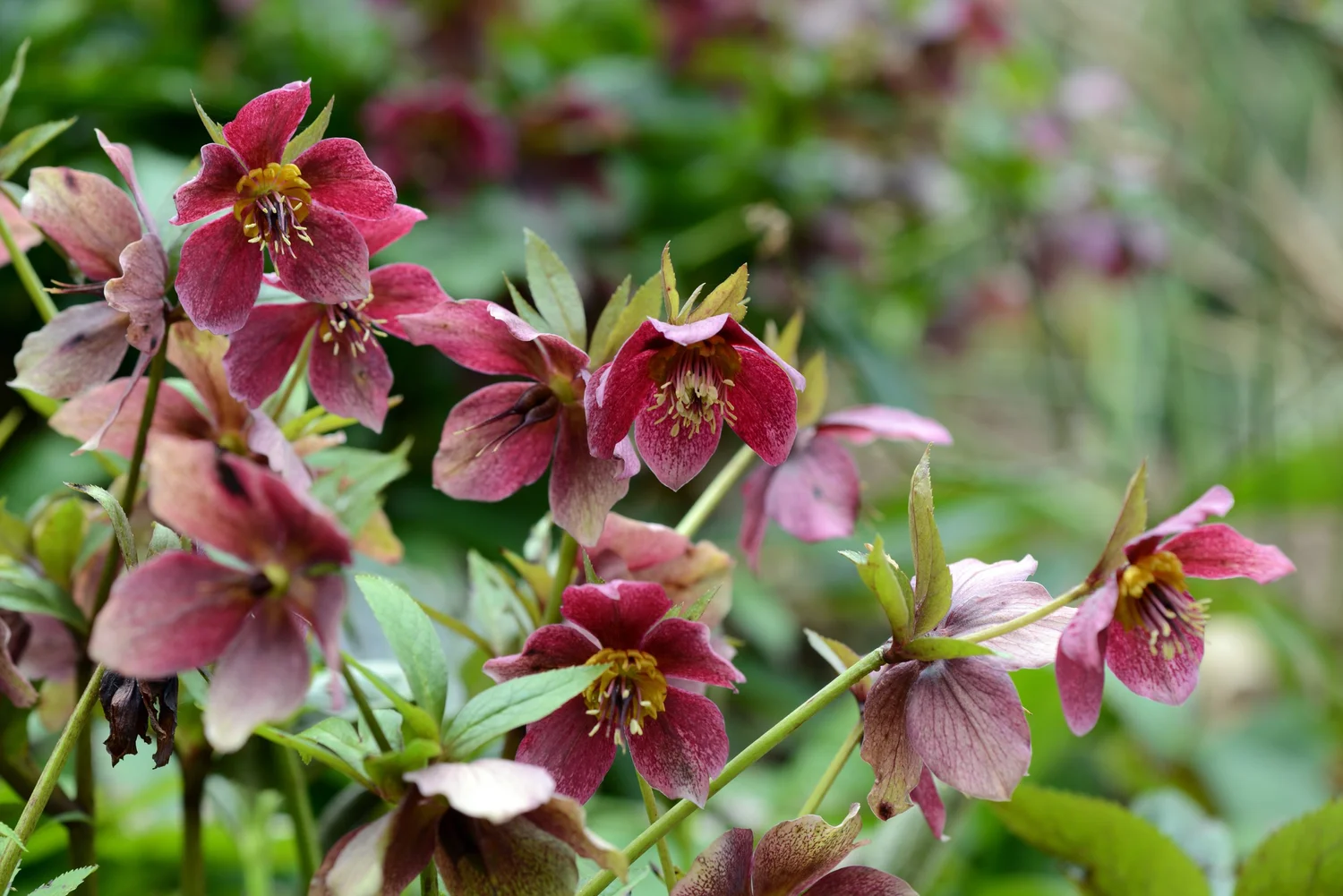
When most of the garden is resting, hellebores are just getting going. Their nodding, saucer-shaped flowers come in white, cream, soft pink, deep plum, slate and almost black, many speckled or edged with contrasting colour. They are hardy, evergreen or semi-evergreen, and they give early bees a valuable source of pollen at a time when little else is in flower.
They are also wonderfully adaptable. Hellebores are happy in the dappled shade under deciduous trees and shrubs, in north-facing borders and in woodland-style planting, which makes them perfect for parts of the garden that can be tricky to fill.
Types of hellebore
Helleborus × hybridus: often called Lenten roses, these are the most popular garden hellebores. They flower from late winter to mid spring, roughly January to April, on plants around 30 to 45cm tall, in a huge range of colours.
Helleborus niger: the Christmas rose, with clean white flowers from around December to February. It is a little shorter, at around 20 to 30cm.
Helleborus argutifolius: the Corsican hellebore, with handsome, spiny grey-green leaves and clusters of pale green flowers in late winter and spring. It is taller, often 60cm to 1m, and copes with more sun than most.
Helleborus foetidus: our native stinking hellebore. Despite the name, it is a beautiful plant, with finely cut dark leaves and bell-shaped green flowers edged with maroon.
Modern hybrids, such as Helleborus × ericsmithii, with upward-facing flowers and marbled foliage that are excellent in pots.
Where to plant hellebores
Most hellebores prefer partial or dappled shade, ideally with a bit of winter sun when the trees above have lost their leaves. They like soil that is rich in organic matter, holds some moisture but never sits wet. They are happy on chalky or neutral soil and grow well on clay as long as it is not waterlogged.
Because the flowers tend to hang their heads, they are lovely planted on a slope, at the top of a low wall or in a raised bed, where you can look up into them. Planting them near a path or a window also means you can enjoy them in the depths of winter without wandering far.
Plant hellebores where you will walk past them in winter. They are at their best seen up close.
How to plant hellebores
Autumn is the ideal time to plant, as the soil is still warm and roots establish well before spring. You can also plant in winter or spring, which is when many people buy them in flower.
Dig a hole a little wider than the pot and mix in some well-rotted compost or leaf mould.
Set the plant so the crown sits level with the surrounding soil. Planting too deep can reduce flowering.
Firm in gently and water well.
Space plants about 40 to 50cm apart so they have room to grow into generous clumps.
Finish with a mulch of leaf mould or garden compost, keeping it away from the crown.
Caring for hellebores
Cutting back old leaves
For Helleborus × hybridus, cut off the old leaves at the base in December or early January, just as the flower buds are starting to rise. This shows off the flowers beautifully and keeps the plants looking fresh. Fresh new leaves follow as the flowers open. Other types, such as the Christmas rose and the Corsican and stinking hellebores, simply need any tired or damaged leaves tidying away.
Feeding and watering
A mulch of leaf mould or compost each autumn is usually all hellebores need. Water new plants in dry spells during their first year. Once established, they are very self-sufficient.
Seedlings and dividing
Hybrid hellebores often self-seed, and the seedlings can be fun to grow on, as each one will be slightly different from its parent. Hellebores are happiest left undisturbed, so only divide them if you need to, and do it carefully after flowering in spring.
Hellebore sap can irritate skin, so wear gloves when cutting back or handling the plants. All parts of the plant are toxic if eaten.
What to plant with hellebores
Hellebores look best in generous groups woven through other shade-loving plants. Snowdrops, winter aconites, Cyclamen coum, pulmonarias, epimediums and ferns all share similar conditions and make a beautiful late winter scene. You can read more about one of their best partners in my guide to growing snowdrops and planting them in the green.
Hellebores at a glance
Flowers: December to April, depending on type.
Height: around 20cm to 1m, most hybrids 30 to 45cm.
Position: partial or dappled shade, sheltered from strong winds.
Soil: rich, moist but well-drained, neutral to alkaline.
Plant: autumn ideally, or winter and spring.
Care: cut old leaves of hybrids in midwinter, mulch each autumn.
If you have a shady corner and want help working out what will thrive there, it is the sort of thing I love to look at in a planting consultation.
Quick answers
When should I cut back hellebore leaves?
For Helleborus × hybridus, cut the old leaves off at the base in December or early January, as the flower buds appear. This shows off the flowers and keeps plants healthy.
Do hellebores like sun or shade?
Most prefer partial or dappled shade, with some winter sun. The Corsican hellebore is the exception and copes well with more sun.
Can you grow hellebores in pots?
Yes. Use a deep pot with a peat-free, loam-rich compost, keep it moist but not wet, and place it somewhere sheltered where you can enjoy the flowers in winter.
