
Naturalistic planting explained, and how to create it at home
Naturalistic planting is a style that takes its cue from wild plant communities, using perennials, grasses and bulbs that suit your conditions and are arranged to look as if they grew there by themselves. It is relaxed rather than random: the plants are carefully chosen and repeated, then allowed to mingle. The result is a garden full of movement, long seasons of interest and plenty of life for wildlife.
What makes planting "naturalistic"?
Naturalistic schemes are inspired by meadows, prairies, woodland edges and grassland, but they are not simply wild gardens. They are designed. The skill lies in creating something that feels effortless while still looking good for many months of the year.
A few principles tend to run through every naturalistic scheme:
Right plant, right place: plants are chosen to suit the existing soil and light, so they need little intervention.
Intermingling: instead of neat blocks, plants weave through one another as they would in the wild.
Grasses as the glue: grasses soften edges, catch the light and link flowering plants together.
The full life cycle: seedheads, stems and autumn colour are valued as much as flowers.
Repetition: a limited palette is repeated so the planting reads as one community.
Why it works so well in gardens
Because the plants are matched to the site, a naturalistic scheme usually needs less watering, feeding and staking than a traditional border. Dense planting covers the soil, which helps keep weeds down. Leaving stems standing through winter gives structure on frosty mornings and offers shelter and food for insects and birds. It is a lovely, generous way to garden.
How to create it at home
1. Start with your conditions
Work out whether your space is sunny and dry, sunny and moist, or partly shaded. Each of these suits a different community of plants. Sunny, free-draining spots suit prairie-style plants and Mediterranean-type perennials, while moist soils suit plants from damp meadows, such as Sanguisorba and Persicaria.
2. Choose a framework of grasses
Grasses give naturalistic planting its movement. Upright Calamagrostis × acutiflora 'Karl Foerster' adds vertical rhythm, while Deschampsia cespitosa and Molinia caerulea form airy veils of flowers that you can see through. My post on the best ornamental grasses for borders has more ideas.
3. Add long-flowering perennials
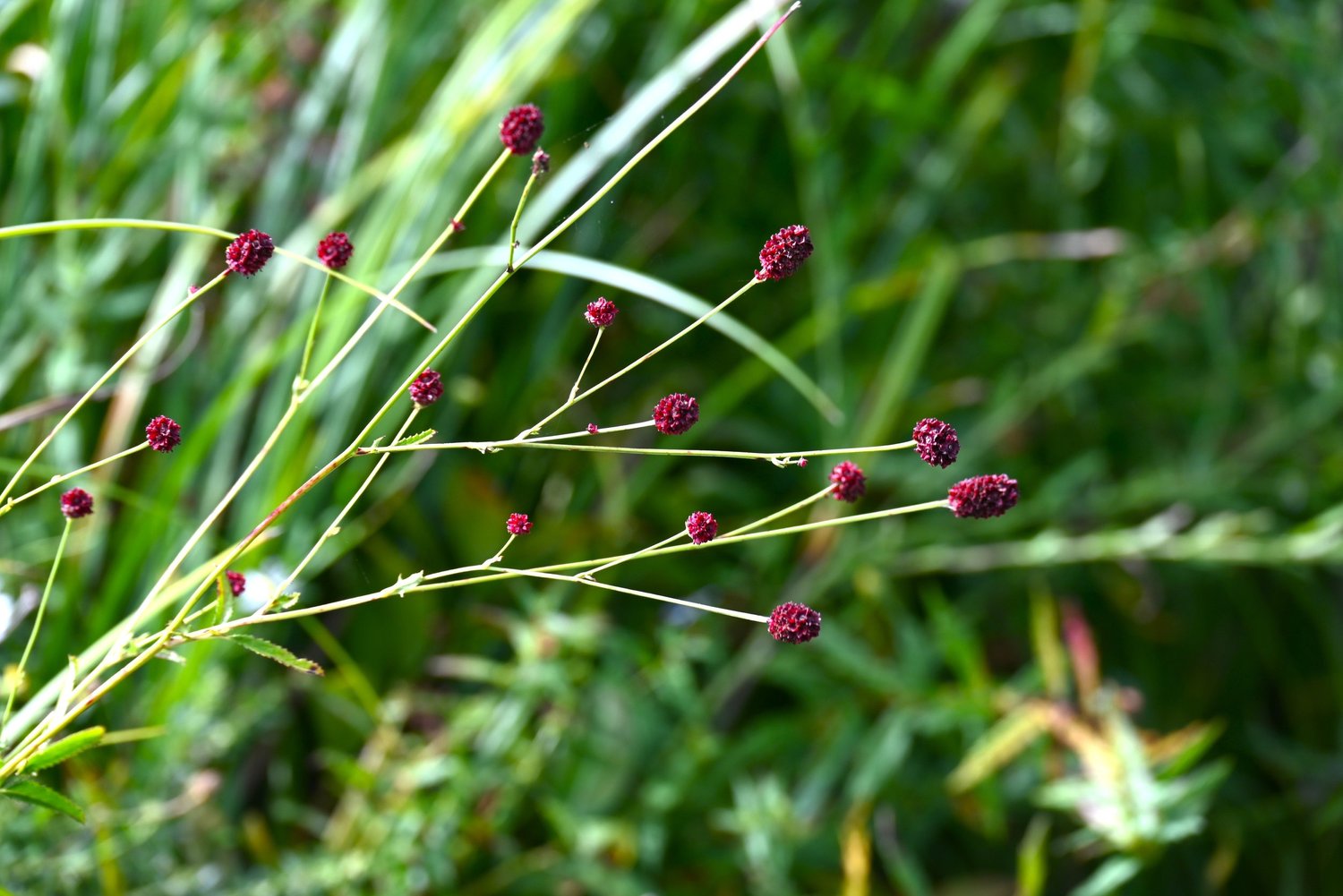
Look for perennials with strong shapes and long seasons. Some of my favourites for this style are Sanguisorba 'Cangshan Cranberry', 'Blackthorn' and 'Tanna', along with Sanguisorba canadensis, whose little bobbles and bottlebrushes float above everything else. Pair them with daisy shapes such as Echinacea, spires like Veronicastrum, and umbels like Selinum or Achillea for contrast.
4. Mix rather than block
There are two simple approaches. You can plant small groups of three to five of each plant and repeat those groups through the space, or you can create a matrix: a base of one or two grasses or ground-covering perennials, with taller "scatter" plants dotted through as individuals. Both create that mingled, natural look.
5. Layer in bulbs
Bulbs bring the scheme to life before the perennials get going. Tulipa 'Ballerina' and 'Spring Green' look beautiful rising through fresh new growth, and Narcissus poeticus var. recurvus, the Pheasant's Eye daffodil, is one of my favourites for its scent and late flowering. Later, Allium 'Mont Blanc' adds white globes above the foliage.
Looking after a naturalistic scheme
Care is simple but well timed. Water new plants through their first summer, then let them stand on their own. Leave stems and seedheads standing over winter, and cut everything back in one go in late winter or early spring, before new growth emerges. Many gardeners chop the debris and leave it as a mulch, or top up with peat-free compost or leaf mould. Edit gently each year, lifting self-seeders where they are not wanted and dividing any plants that start to dominate.
Naturalistic planting at a glance
Match plants to your soil and light first.
Use grasses to link and soften the scheme.
Choose perennials with strong shapes and long seasons.
Repeat a limited palette and let plants intermingle.
Add bulbs for spring interest.
Leave stems over winter and cut back in late winter.
If you are planning a scheme like this and would like help choosing the right community of plants for your garden, I offer planting consultations across the UK.
Quick answers
Does naturalistic planting work in a small garden?
Yes. Use a smaller palette, choose compact grasses such as Sesleria autumnalis, and plant densely. Even a single bed can have a natural, meadow-like feel.
Is naturalistic planting low maintenance?
It is generally lower maintenance than a traditional border once established, but it still benefits from a big cut back in late winter and some light editing each year.
When should I cut back naturalistic planting?
Leave stems standing through winter for structure and wildlife, then cut back in late winter or early spring before the new shoots appear.
