
Plant of the month: sanguisorba
If you want a border that still looks lively in September, sanguisorba is a plant to know. Its little bobbles and bottlebrushes of flower float on fine, wiry stems from midsummer into autumn, moving in the slightest breeze and weaving between everything around them. It's easy to grow, loved by bees, and it gives a planting scheme that relaxed, naturalistic feel that's so hard to fake.

What is sanguisorba?
Sanguisorba, or burnet, is a hardy perennial in the rose family. Our native great burnet, Sanguisorba officinalis, grows wild in damp meadows across the UK, which tells you a lot about what it likes. Garden forms range from compact plants around 60cm tall to airy giants of two metres, with flowers in deep wine red, soft pink and white.
Varieties worth growing
My favourites are 'Cangshan Cranberry', 'Blackthorn', 'Tanna' and Sanguisorba canadensis. Between them they give you rich reds, near black and white, from compact to tall.
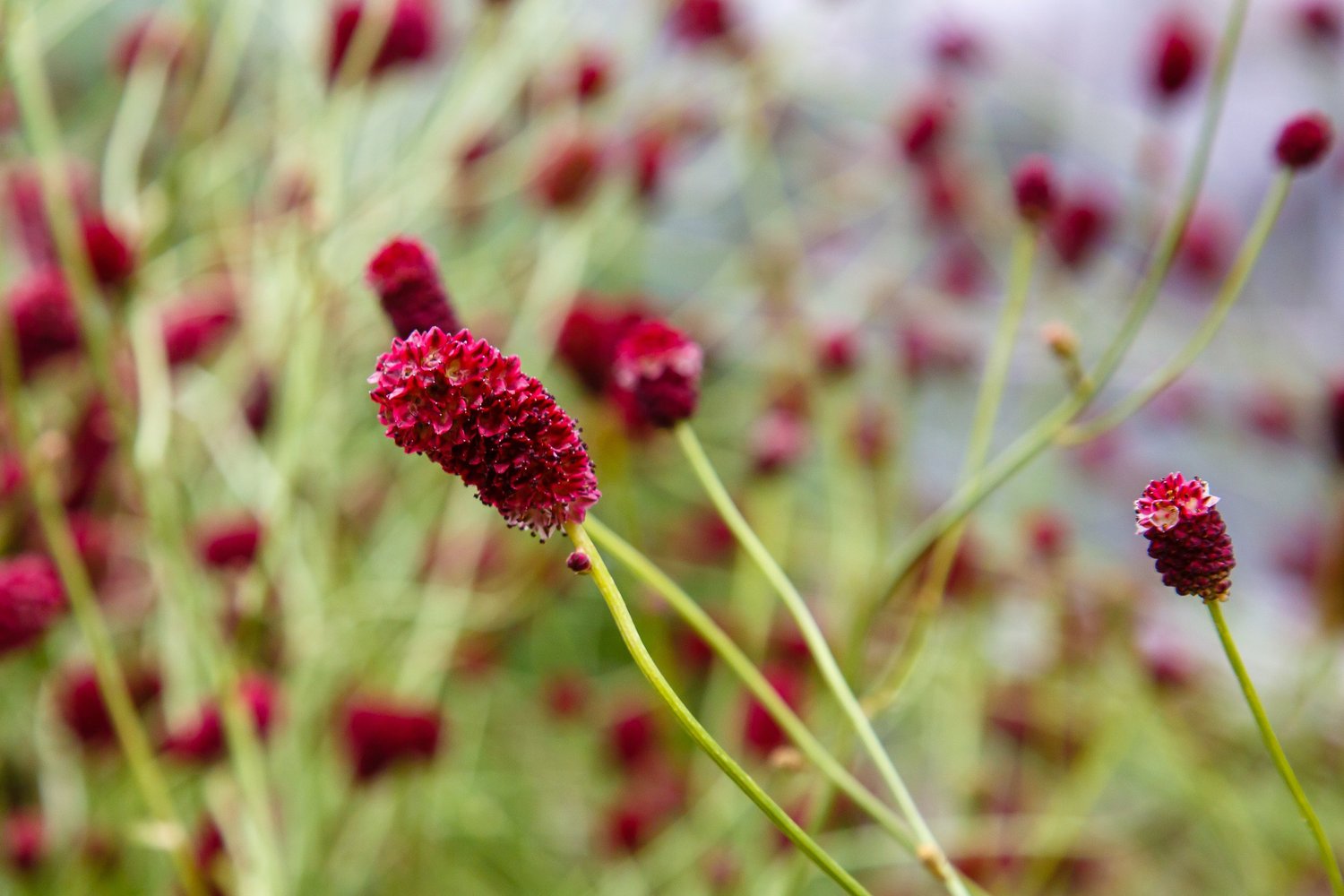
Sanguisorba 'Cangshan Cranberry': tall and airy, with deep cranberry-red flowers on fine, wiry stems that weave through grasses.
Sanguisorba 'Blackthorn': very dark, almost black-red buttons on slender stems, brilliant for adding depth to a scheme.
Sanguisorba 'Tanna': a compact, deep red form, perfect for the front of a border or smaller gardens.
Sanguisorba canadensis: tall white bottlebrushes in late summer, at its best in soil that stays moist.
Sanguisorba officinalis 'Red Thunder': dark red bobbles on tall, sturdy stems, lovely with grasses.
Sanguisorba menziesii: one of the earliest to flower, with chunky dark red bottlebrushes from early summer.
How to grow it
Sanguisorba is happiest in full sun or light shade, in soil that stays moist through summer. It's not fussy about soil type and copes well with clay. Give it a good mulch in spring and a deep drink in dry spells, and it will reward you for years.
Taller varieties can lean as they flower, so grow them up through grasses and sturdier perennials, which act as a natural support. Leave the stems and seedheads standing over autumn, then cut everything back in late winter. Clumps can be lifted and divided in spring every few years to keep them vigorous.
Plant it where the low sun can shine through it, and it will light up the end of the day.
What to plant with sanguisorba
Because the flowers are small and held high on fine stems, sanguisorba works best with plants that have bolder shapes and a similar love of moisture.
Grasses: molinia, deschampsia and calamagrostis share its airy feel and hold it up.
Daisies: echinacea and rudbeckia give a contrast of big, flat flowers.
Spires: veronicastrum and persicaria amplexicaulis add strong verticals.
Umbels: selinum and eupatorium give soft, domed heads in late summer.
Sanguisorba at a glance
Flowers: midsummer into autumn, in red, pink or white.
Height: 60cm to 2m, depending on variety.
Position: full sun or light shade.
Soil: moist, any type, happy on clay.
Care: cut back in late winter, divide every few years in spring.
Quick answers
Does sanguisorba need staking?
Compact varieties stand well on their own. Taller ones are best grown among grasses and sturdy perennials, which hold them up naturally and look far better than canes.
When should I plant sanguisorba?
Autumn or spring. Planted in autumn, it has time to settle in before flowering the following summer. Water well in its first year while the roots establish.
