
How to plant a border that looks good all year
A border that looks good all year isn't about cramming in as many plants as possible. It's about choosing plants that take turns, so that as one finishes, the next is coming into its own. Get the bones right, repeat your best plants, and think in seasons rather than single moments, and you'll have something to enjoy from the first snowdrop to the last frosted seedhead.
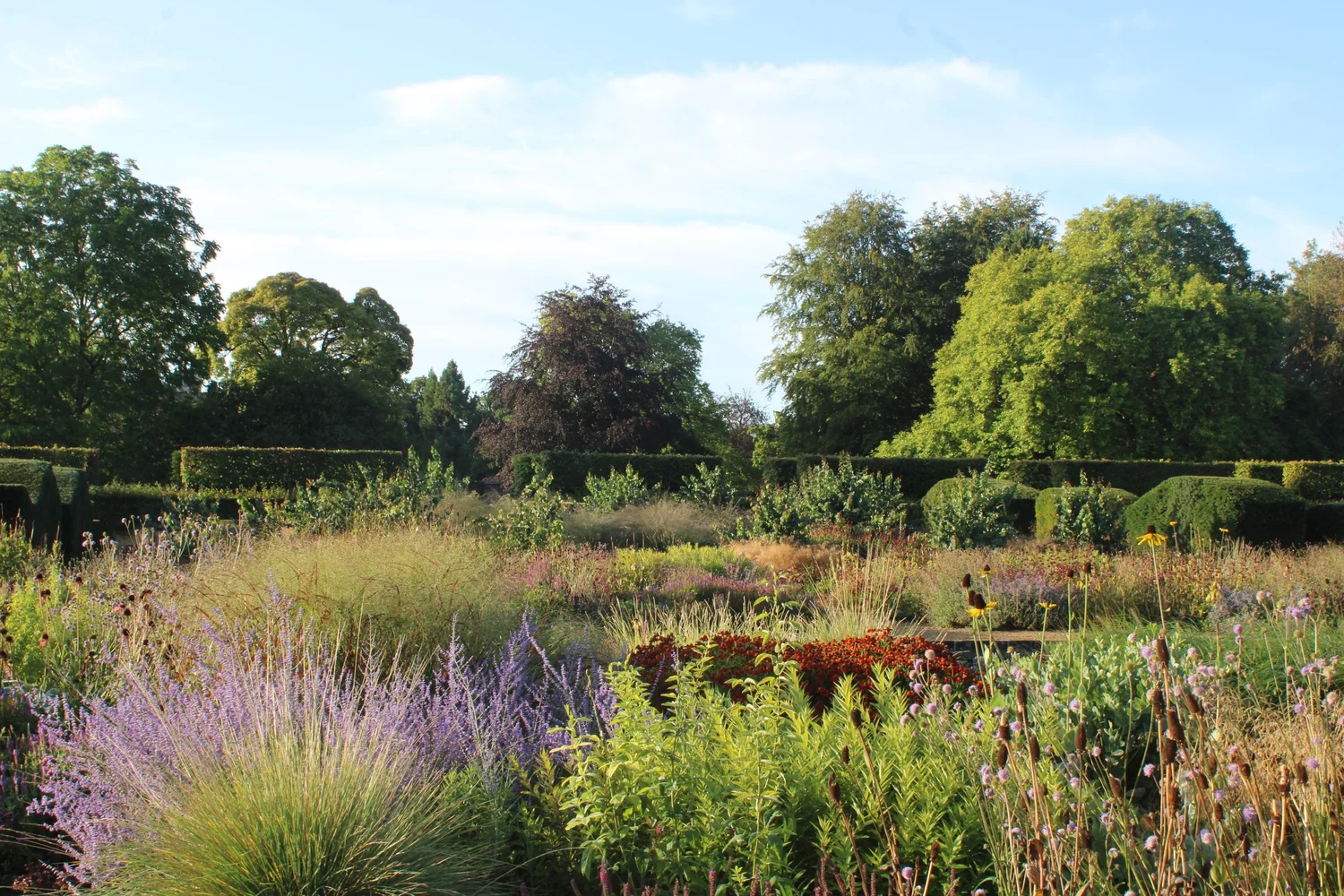
1. Start with structure
Every great border has a framework that stays put through winter. Evergreen shrubs, clipped shapes such as yew or box alternatives, and a few deciduous shrubs with good bark or form give the border its shape when the perennials have died back. Aim for roughly a quarter to a third of the planting to be this kind of permanent structure. It's what makes a border look intentional in February.
2. Repeat your best plants
Repetition is the quickest way to make a border feel calm and considered. Choose a handful of key plants and repeat them along the length of the bed, rather than dotting single plants of lots of different things. Your eye follows the repeats, and the whole border hangs together.
3. Plant in groups
Plant perennials in groups of three, five or seven, or in loose drifts that weave into each other. As a rough guide, you'll need around five to seven perennials per square metre, fewer for big plants and more for small ones. Planting generously means less bare soil, fewer weeds, and a border that looks full in its first full year.
4. Layer heights, but break the rules
Tall at the back and short at the front is a good starting point, but a few see-through plants at the front lift a border enormously. Tall, airy plants such as verbena bonariensis, sanguisorba or tall grasses can stand right at the edge, and you look through them to the planting behind.
5. Plan for every season
Walk through the year in your head and make sure something is happening in each season.
Late winter and spring: snowdrops, hellebores, narcissus, tulips and camassia, tucked in between perennials that will hide their fading leaves.
Early summer: geums, salvias, nepeta, alliums and irises.
High summer: echinacea, phlox, achillea, astrantia and persicaria.
Late summer and autumn: asters, sanguisorba, Japanese anemones, sedum, and grasses such as molinia and miscanthus.
Winter: seedheads, grasses and evergreen structure, with the low sun behind them.
6. Prepare the soil, then plant
Clear perennial weeds thoroughly, then improve the soil with homemade compost, leaf mould or a good peat-free soil improver. Autumn and spring are the best times to plant. Water new plants well in, then mulch to hold moisture and keep weeds down.
7. Look after it through the year
A year-round border needs a little attention at the right moments. Cut back perennials and grasses in late winter, just before new growth appears. Try the "Chelsea chop" in late May, cutting some late-flowering perennials back by a third to make them bushier and stop them flopping. Lift and divide anything congested every few years in autumn or spring.
Year-round border checklist
Make a quarter to a third of the planting permanent structure.
Repeat a handful of key plants along the border.
Plant perennials in groups, around five to seven per square metre.
Add a few tall, see-through plants near the front.
Check you have something happening in every season.
Leave seedheads standing until late winter.
Quick answers
When is the best time to plant a new border?
Autumn and spring. In autumn the soil is still warm, so roots establish quickly and plants need less watering the following summer. Spring planting is ideal on very heavy, wet soils.
How many plants do I need for a border?
As a rough guide, five to seven perennials per square metre, plus your structural shrubs. Large plants such as tall grasses need more room, smaller front-of-border plants can go in more closely.
