
Plant combinations that work: geum, salvia and nepeta
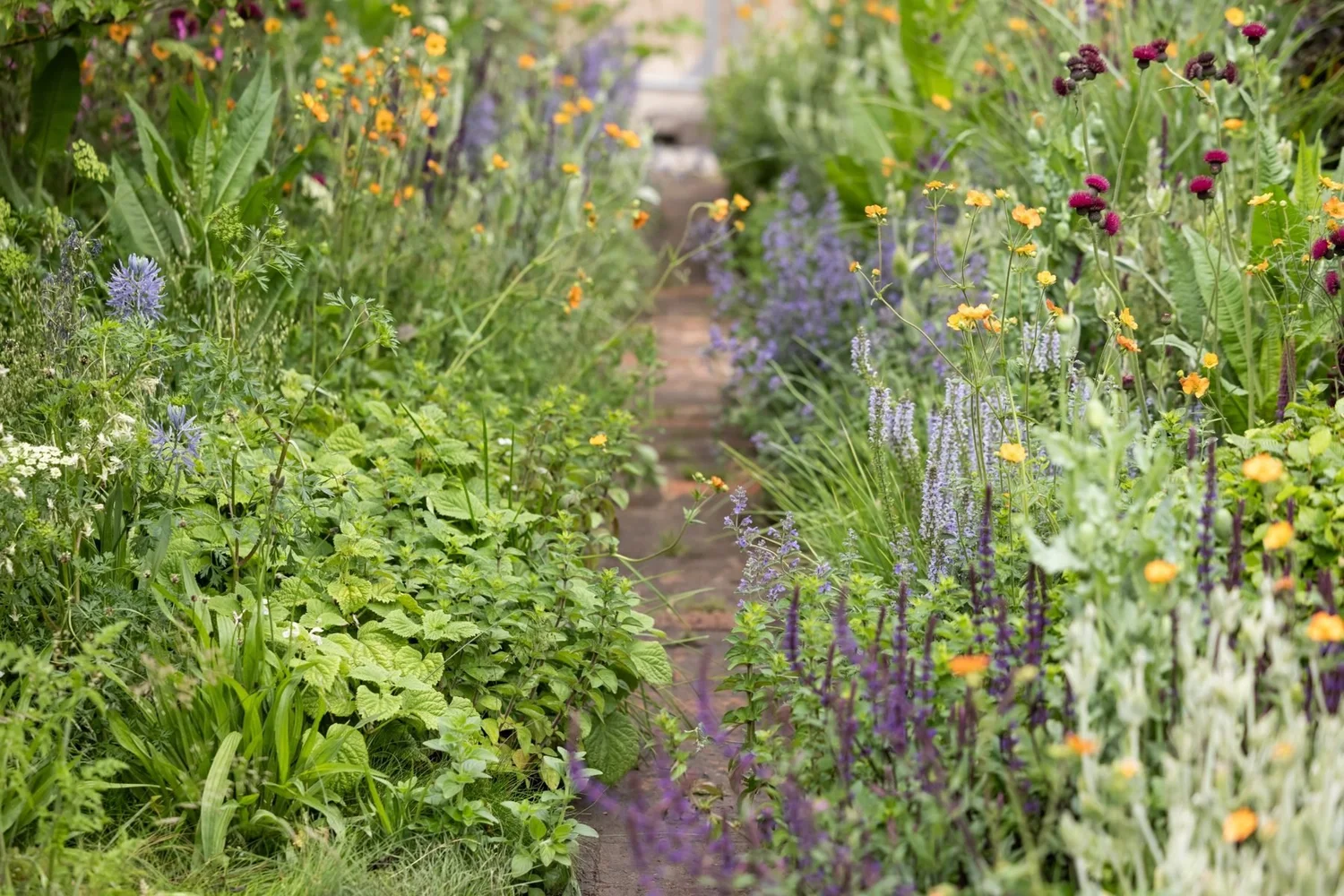
Some plant combinations just work, and geum, salvia and nepeta is one of them. Bright copper and orange buttons floating over spires of violet and clouds of soft blue: it's warm, cheerful and buzzing with bees from late spring into summer. It's also wonderfully easy, which is exactly what makes it such a good place to start if you're building a border of your own.
Why it works
Colour
Orange and violet-blue sit opposite each other on the colour wheel, so they make each other glow. The geum supplies the sparks, and the salvia and nepeta provide a cool, calm backdrop that stops it feeling too loud.
Shape
Good combinations mix shapes as well as colours. Geum flowers are little buttons held on fine stems, salvia gives upright spires, and nepeta forms a soft, billowing mound. Three different shapes, all at a similar height, knit together into one rich layer of planting.
Timing
All three flower together in late spring and early summer, and all three will flower again if you give them a quick cut back after the first flush. That means colour from May well into late summer from just three plants.
Varieties to try
Geum: 'Totally Tangerine' for long-flowering apricot orange, or 'Prinses Juliana' for a clear, bright orange.
Salvia: Salvia nemorosa 'Caradonna' has deep violet spires on almost black stems, or try 'Ostfriesland' for a shorter, richer purple.
Nepeta: 'Six Hills Giant' for big, generous clouds of blue, or 'Walker's Low' for something a little more compact.
In the Dog Garden, deep crimson cirsium joined the mix, adding a richer, darker note that pulls the whole scheme together.
How to plant it
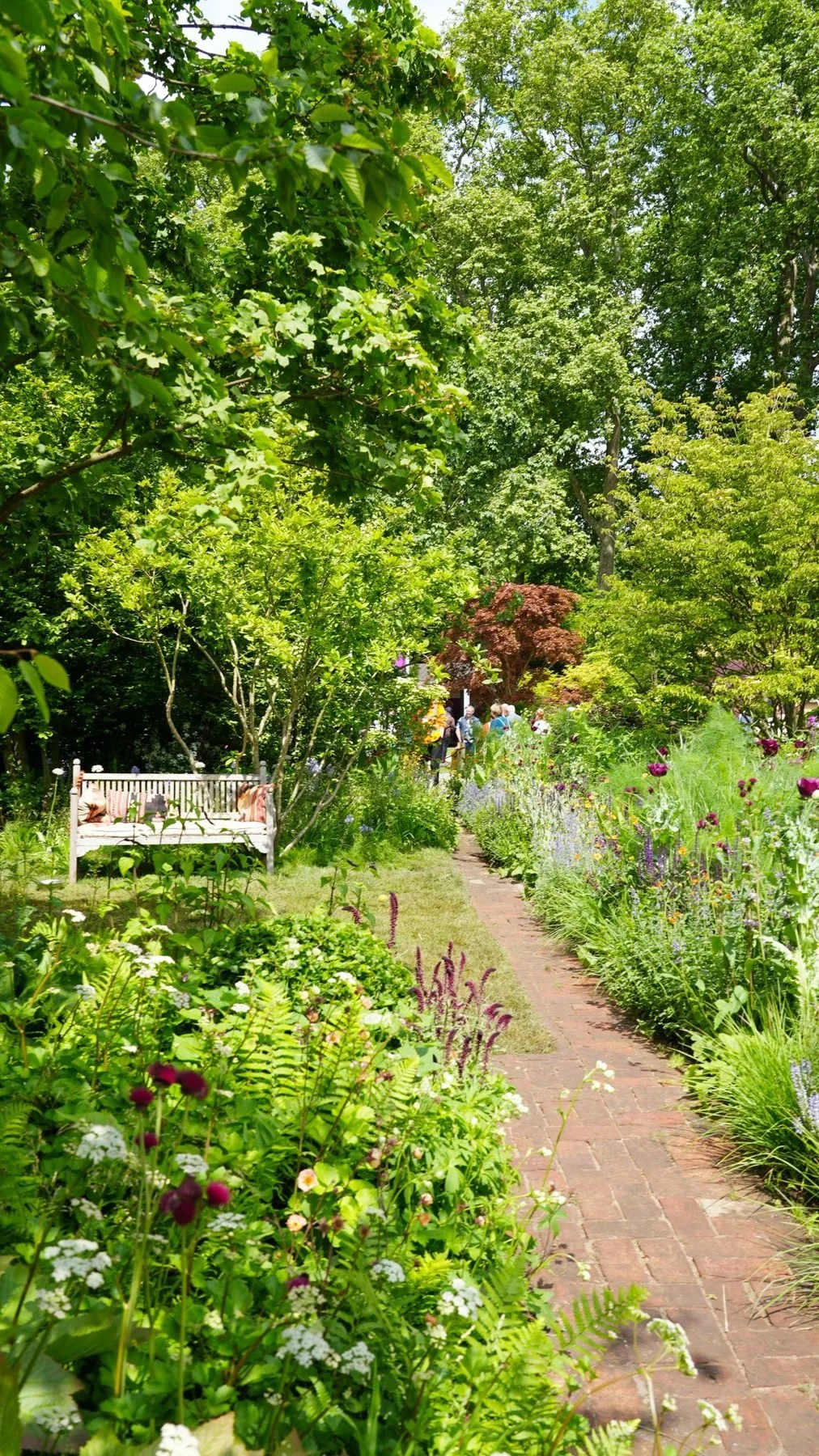
Choose a sunny spot with well-drained soil. Nepeta and salvia are happy in dry conditions once established, while geums appreciate soil that doesn't dry out completely, so dig in some compost or leaf mould before planting. For each square metre, try three geums, three salvias and one or two nepetas, repeated along the border in loose drifts so the colours weave through each other.
Looking after it
When the first flush of flowers fades in early summer, cut the nepeta and salvia back by about half. They'll regrow quickly and flower again. Deadhead the geums to keep them going, and cut everything back in late winter. Every few years, lift and divide the geums in spring or autumn to keep them flowering freely.
The combination at a glance
Plants: geum, Salvia nemorosa and nepeta, plus cirsium for depth.
Flowering: May to July, with a second flush into late summer.
Position: full sun, well-drained soil.
Per square metre: three geum, three salvia, one or two nepeta.
Care: cut back after the first flush, and again in late winter.
Quick answers
Will this combination grow in a pot?
Yes. A large container of geum, a compact salvia such as 'Caradonna' and 'Walker's Low' nepeta looks lovely on a sunny patio. Use a peat-free compost and water regularly through summer.
When should I plant geum, salvia and nepeta?
Autumn or spring are ideal. Container-grown plants can go in through summer too, as long as you keep them well watered while they settle.
