
What to do in the garden in November
November is the perfect month to plant tulips, start planting bare-root trees, shrubs and roses, and tuck the garden up for winter. The soil still holds a little warmth, the borders are full of seedheads and texture, and every job you do now pays you back in spring. Here is what to focus on this month.
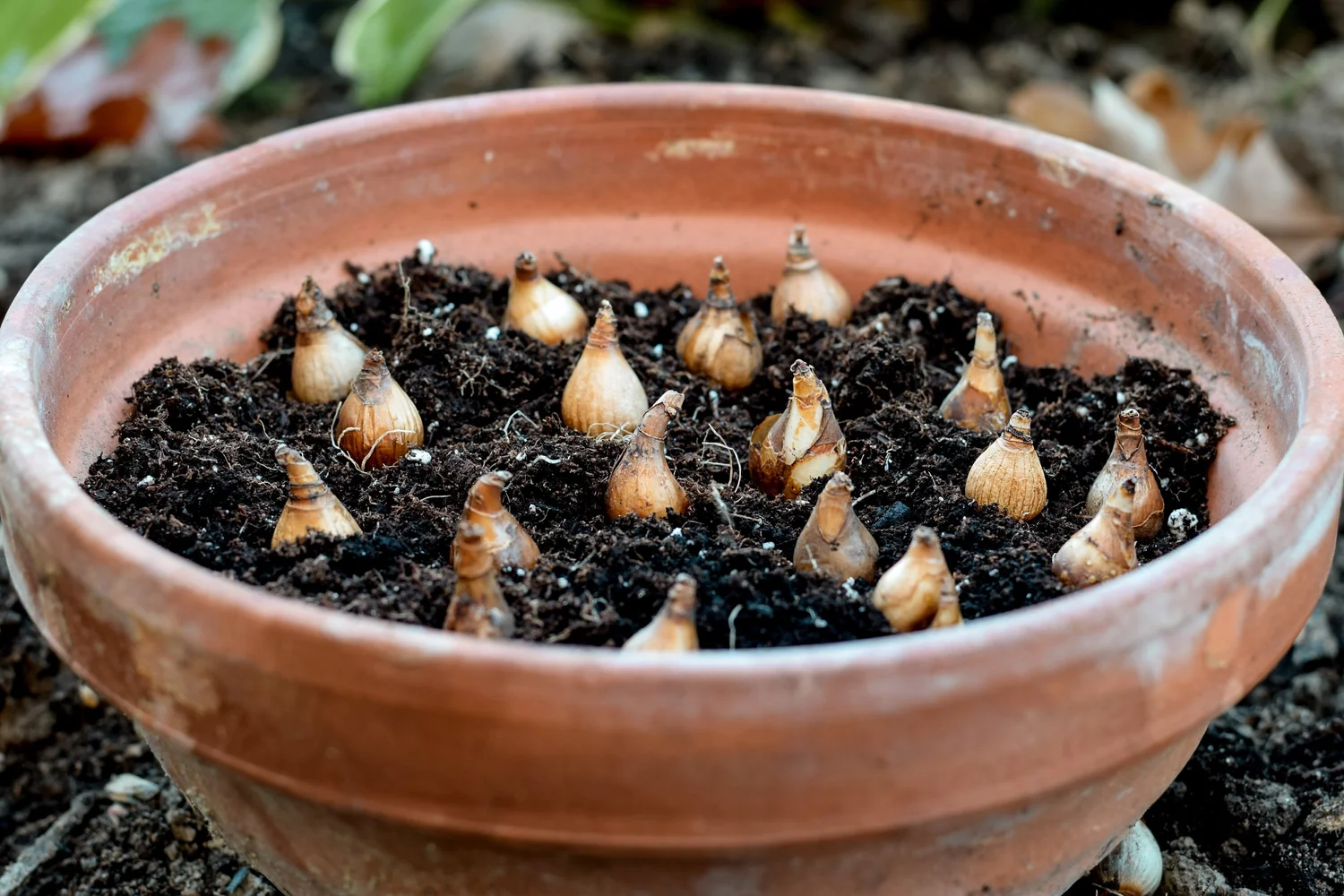
Plant tulips now
November is tulip month. Planting once the soil has properly cooled helps tulips stay healthy, as the cold reduces the risk of tulip fire, a fungal disease that thrives in warm, damp conditions. Plant them deep, around 15 to 20cm, which helps them come back year after year and keeps them steady in spring winds. In pots, you can pack them in closely, almost shoulder to shoulder, for a really generous display.
If you have only just started on bulbs this autumn, the jobs from my October garden jobs still apply: daffodils and alliums can go in now too, as long as they feel firm and healthy. Allium 'Mont Blanc', one of my favourites, gives tall white globes in early summer and is well worth squeezing in.
My favourite tulips
I come back to three tulips again and again. Tulipa 'Ballerina' is a lily-flowered tulip in a warm, glowing orange, with a lovely scent and elegant pointed petals. Tulipa 'Spring Green' is ivory white feathered with green, and it looks fresh and calm in borders and pots. Tulipa 'Queen of Night' is a deep, velvety maroon that reads almost black, and it brings real depth to a planting.
They all flower in late spring, so they work beautifully together. Try 'Queen of Night' with 'Spring Green' for something cool and sophisticated, or 'Ballerina' with 'Queen of Night' for a rich, warm contrast. Plant them in loose drifts through a border rather than neat rows, and they will rise up through fresh perennial foliage like they have always been there.
Start the bare-root season
From November through to March, while plants are dormant, you can buy and plant bare-root trees, shrubs, hedging and roses. They are better value than potted plants, kinder on the environment with no pot or compost to transport, and they establish quickly because they go into the ground at the ideal time.
Soak the roots in a bucket of water for an hour or so before planting. Dig a hole wide enough to spread the roots out comfortably, plant at the same depth they were growing before (look for the soil mark on the stem), firm in well and water. Choose a day when the ground is workable, not frozen or waterlogged, and if the weather turns, heel plants into a spare patch of soil or a large pot of compost until conditions improve.
Make the most of fallen leaves
Keep gathering leaves from lawns, paths and ponds. Pile them into a wire cage or pop them into bin bags with a few holes punched in, give them a splash of water if they are dry, and leave them be. In a year or two they become crumbly leaf mould, a superb mulch and a brilliant ingredient for homemade potting mixes. It is one of the easiest ways to garden without peat, and there is more on that in my guide to starting peat-free gardening.
Leaves that fall on borders can stay where they are. Worms will pull them into the soil over winter, and they give shelter to beetles and other helpful creatures.
Look after tender plants and pots
Once frost has blackened dahlia foliage, cut the stems down. In colder or wetter gardens, lift the tubers, let them dry off and store them in a frost-free shed or garage in dry compost or newspaper. In milder, well-drained gardens you can leave them in the ground under a thick mulch of compost or bark.
Bring pelargoniums, salvias you want to keep safe, and other tender plants into a greenhouse, porch or cool, bright windowsill. Raise outdoor pots onto pot feet or bricks so they drain freely, and group them together near the house, where they share a bit of warmth and shelter. Terracotta pots can be wrapped in hessian or fleece for extra protection.
Garden for wildlife
Leave seedheads and hollow stems standing, as they feed birds and give overwintering insects somewhere to shelter. Clean bird feeders and baths, keep them topped up, and leave a quiet corner with a log pile or a heap of leaves for hedgehogs. If you are having a bonfire, build it on the day you light it, or move the pile before lighting, so nothing has crept inside.
November checklist
Plant tulips around 15 to 20cm deep.
Finish planting any remaining spring bulbs, including alliums.
Plant bare-root trees, shrubs, hedging and roses.
Gather leaves for leaf mould.
Cut back and lift or mulch dahlias after the first frost.
Move tender plants under cover and raise pots onto feet.
Leave seedheads standing and keep bird feeders clean and full.
Clean pots, sharpen tools and start a wish list for next year.
Enjoy the garden as it changes
November gardens have their own beauty. Grasses turn bleached and golden, seedheads catch the low light, and autumn colour in trees and shrubs can be spectacular. It is also a lovely time to walk round with a notebook. Jot down where you would like more structure for winter, and where a few more bulbs would lift a gap in spring. When December arrives, my December garden jobs pick up from here.
Quick answers
Is it too late to plant tulips in November?
Not at all. November is the ideal month to plant tulips in the UK, and they can still go in during early December if the ground is not frozen.
How deep should I plant tulip bulbs?
Around 15 to 20cm deep, pointed end up. Deeper planting helps them return in following years and keeps tall stems steady.
Can I plant bare-root roses in November?
Yes. November is the start of the bare-root season, and roses planted now settle in over winter. Soak the roots first and plant on a day when the soil is not frozen or waterlogged.
