
The best plants for shade, dry and damp
The best plants for shade depend on whether it's dry or damp. For dry shade under trees or by walls, look to epimediums, Geranium macrorrhizum, Euphorbia amygdaloides var. robbiae, ferns such as Dryopteris and cyclamen. For damp shade, hostas, astilbes, rodgersias, primulas and moisture-loving ferns will thrive. Get the conditions right and shade becomes one of the most beautiful, restful parts of the garden.
First, read your shade
Before choosing plants, spend a little time looking at the space. Is it in shade all day, or does it get a few hours of morning or evening sun? Is the soil dry and full of tree roots, or does it stay cool and moist? Dappled shade under deciduous trees is very different from the deep, year-round shade on the north side of a building, and plants that love one may struggle in the other.
A simple test is to dig a small hole in mid-summer. If the soil is dusty and dry a spade's depth down, you have dry shade. If it's cool and damp, you've got moist shade, and a much wider choice of lush, leafy plants.
Plants for dry shade
Dry shade is often described as the trickiest spot in the garden, but there are plants that genuinely enjoy it. Many come from woodland floors, where they've adapted to competing with tree roots.
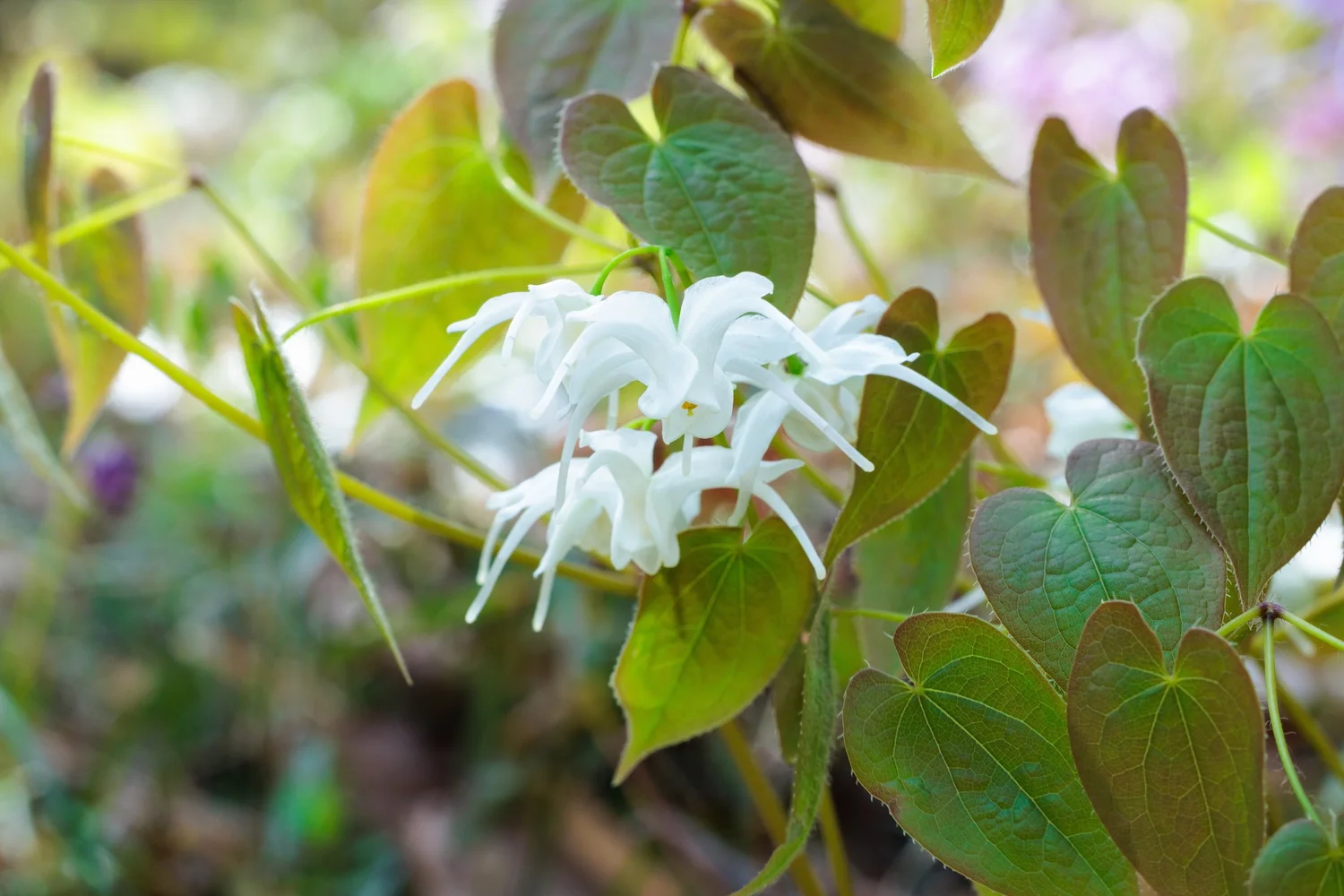
Epimedium: elegant, heart-shaped leaves and delicate spring flowers. Cut the old leaves off in late winter so the flowers show.
Geranium macrorrhizum: aromatic, semi-evergreen ground cover with pink or white flowers in late spring. Wonderfully tough.
Geranium phaeum: the dusky cranesbill, with nodding dark flowers that look lovely in dappled light.
Euphorbia amygdaloides var. robbiae: glossy evergreen rosettes and lime-green spring flowers. It spreads, which is exactly what you want under trees.
Ferns: Dryopteris filix-mas and Polystichum setiferum cope well with drier conditions once established.
Luzula sylvatica: the greater woodrush, an evergreen grass-like plant for covering ground.
Bulbs: Cyclamen hederifolium for autumn and snowdrops for late winter, both happy among tree roots.
For shrubs, Sarcococca brings scented winter flowers, and Mahonia gives bold evergreen structure. In dry shade, plant small, add plenty of organic matter to the planting hole, and water well through the first year until roots are established.
Plants for damp shade
Moist, shady soil is a gift. This is where you can grow big, lush foliage and create something with a real woodland or streamside feel.
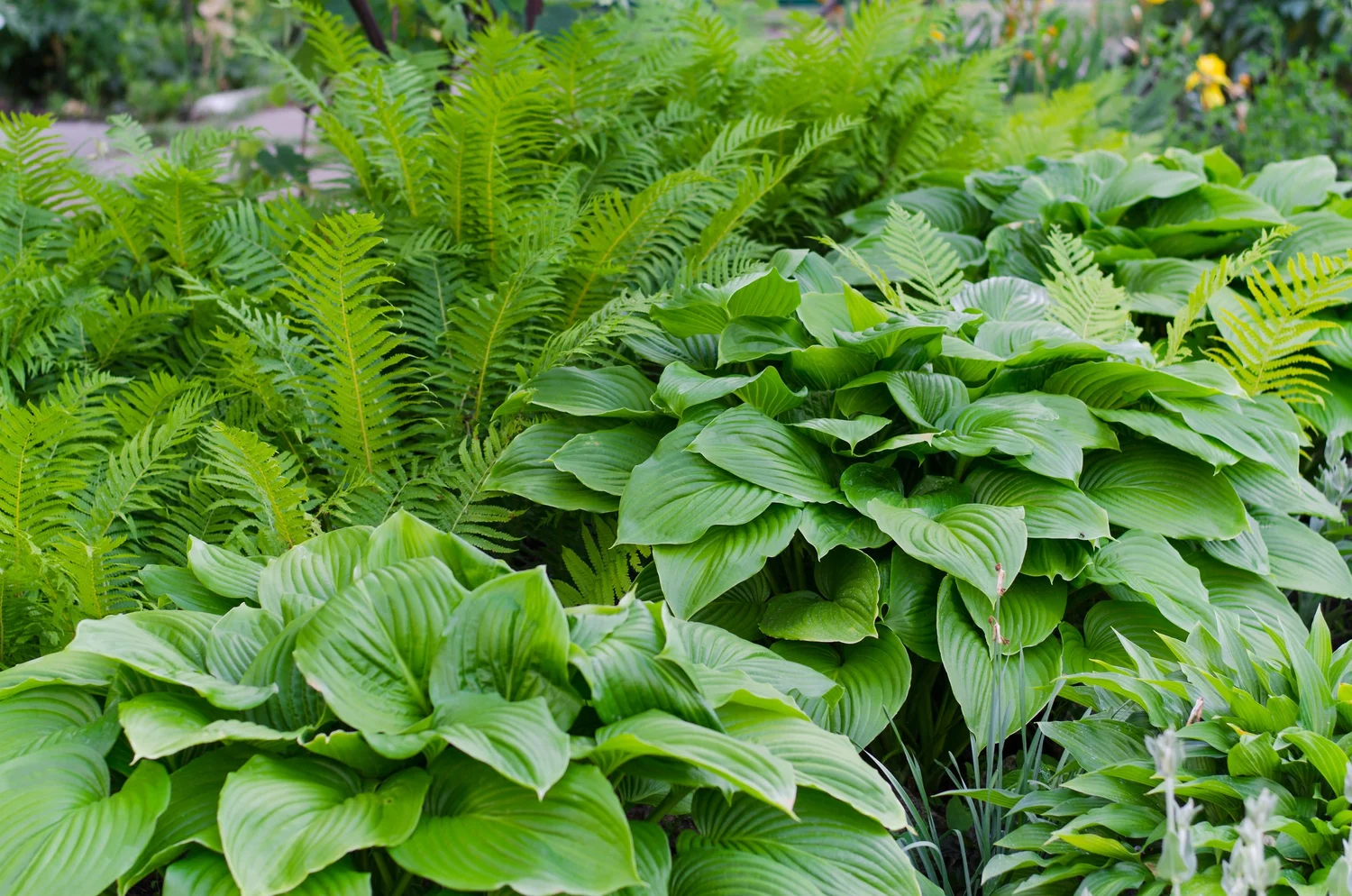
Hosta: endless leaf shapes and colours. Thicker-leaved varieties tend to be more resistant to slugs.
Astilbe: feathery plumes in summer, and seedheads that stand well into winter.
Rodgersia: dramatic, bold leaves and tall flower spikes for larger spaces.
Primula: candelabra primulas are glorious in moist, dappled shade in early summer.
Ferns: the shuttlecock fern, Matteuccia struthiopteris, and the royal fern, Osmunda regalis, both love moisture.
Persicaria bistorta: soft pink bottlebrush flowers and good ground cover.
Brunnera macrophylla: forget-me-not blue flowers in spring, and lovely foliage in the silver-leaved forms.
Astrantias and Hakonechloa macra, the Japanese forest grass, are also good choices in light or partial shade with moist soil, and help to bridge sunnier parts of the garden with the shadier ones.
Making shade sing
In shade, foliage does most of the work. Contrast big, bold leaves with fine, feathery ones, and glossy with matt. Pale flowers and variegated or silver leaves glow in low light, so white foxgloves, white astilbes and silver brunneras are well worth including. Spring is often the high point in shade, before the tree canopy closes over, so it is worth putting extra bulbs and early flowers here. Plant in generous groups and let ground cover knit together, which keeps weeds down and gives that calm, layered woodland look.
Mulching each year with leaf mould or a peat-free soil improver helps both dry and damp shade, holding moisture in one and improving the soil in the other. My peat-free gardening guide covers the options. If you'd like help working out a shady corner, I offer planting consultations.
Shade planting checklist
Work out whether your shade is dry or damp before buying plants.
In dry shade, plant small and water well through the first year.
Add leaf mould or compost when planting and mulch every year.
Use foliage contrast as your main tool.
Add pale flowers and silver or variegated leaves to lift dark corners.
Let ground cover spread to knit the planting together.
Quick answers
What grows in dry shade under trees?
Epimediums, Geranium macrorrhizum, Euphorbia amygdaloides var. robbiae, Luzula sylvatica, male fern and Cyclamen hederifolium are all reliable. Plant them small and water through the first year.
What flowers grow well in full shade?
Hellebores, epimediums, foxgloves, Geranium phaeum, astilbes in moist soil and spring bulbs such as snowdrops all flower well in shade. For full shade, foliage plants and ferns will often give the longest season.
