
The best plants for winter interest
The best plants for winter interest are those with coloured stems or bark, long-lasting seedheads and grasses, good evergreen structure, and winter flowers that bring scent on cold days. Dogwoods, ornamental birches, grasses such as Calamagrostis, evergreens like Sarcococca, and flowering shrubs such as witch hazel and Viburnum × bodnantense 'Dawn' will keep a garden looking alive from November to March. Here are the plants I would reach for, and how to use them.
Coloured stems
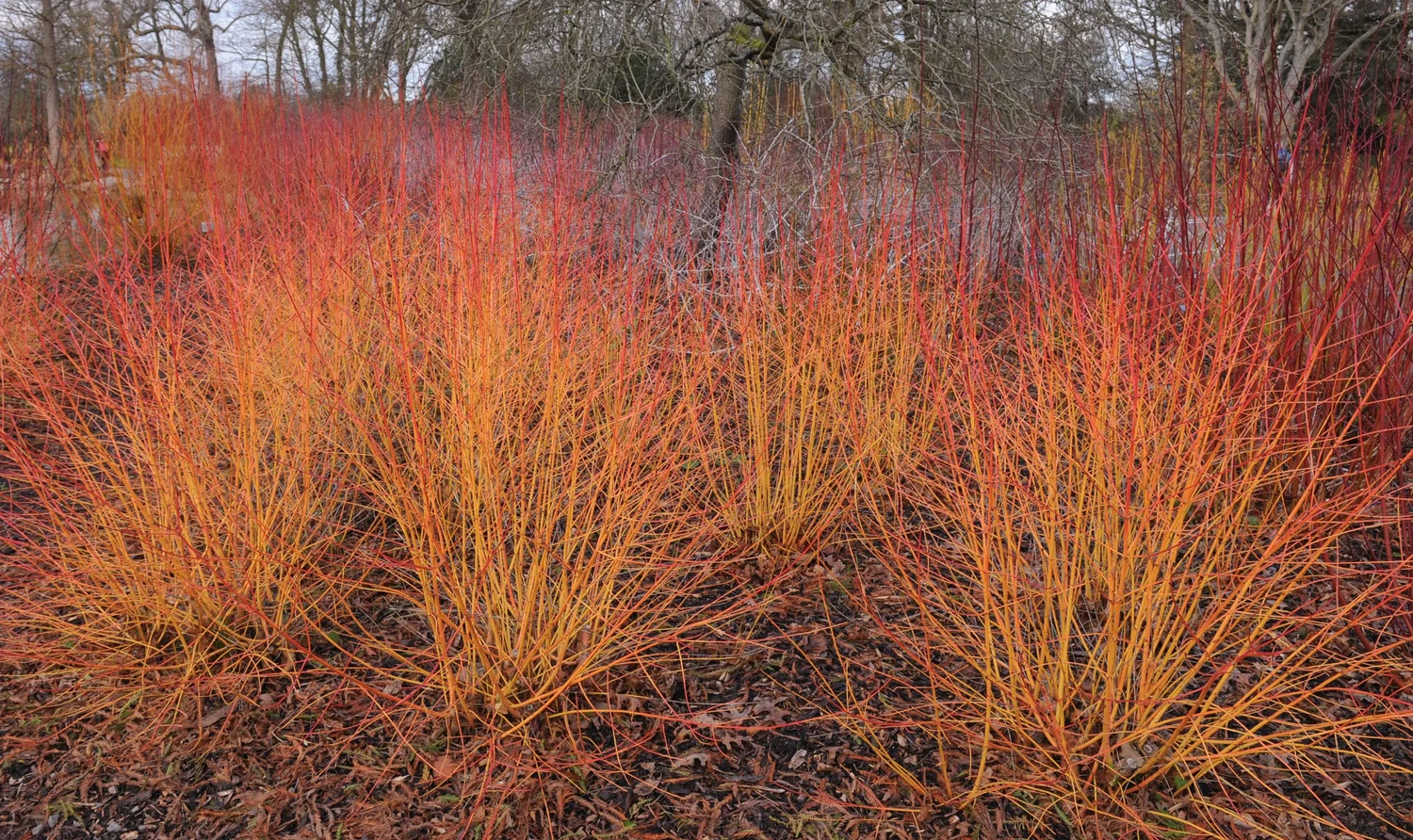
Few things brighten a winter garden like a group of coloured stems catching low sunlight. Dogwoods are the easiest place to start. Cornus sanguinea 'Midwinter Fire' has stems that glow orange, yellow and red, while Cornus alba 'Sibirica' is a clear, bright red. For something different, Cornus sericea 'Flaviramea' has fresh lime-green stems. Willows such as Salix alba var. vitellina 'Britzensis' give vivid orange-scarlet stems, and the ghostly white stems of Rubus cockburnianus look striking against a dark hedge.
The trick with all of these is to plant them in groups, ideally where they catch the sun, and to prune them regularly. The brightest colour is on young stems, so cut some or all of the stems back hard to a low framework in early spring, before the leaves open. Each year you will get a fresh crop of vivid new growth.
Beautiful bark
Trees with lovely bark earn their place all year, but winter is when they shine. The white-barked Himalayan birch, Betula utilis var. jacquemontii, is a classic, especially planted as a small multi-stemmed group. Prunus serrula has polished, mahogany-red bark that begs to be touched, and the paperbark maple, Acer griseum, peels in thin cinnamon curls. All three make good trees for smaller gardens. Plant them where low winter sun can light them from the side or behind.
Seedheads that stand
Leaving perennials standing through winter is one of the simplest ways to keep a border interesting. Seedheads add shape and rhythm, look magical with frost on them, and give birds food and insects shelter. Some of the best are Phlomis russeliana, with its tiered whorls, the dark domes of Echinacea and Rudbeckia, the flat plates of Achillea, the spiky heads of Eryngium, and the papery flowers of sedums (Hylotelephium). The dark bobbles of my favourite sanguisorbas also hold on into winter. You can read more about them in my sanguisorba plant of the month post.
Cut seedheads down only once they collapse or turn to mush, and leave the rest until late winter, just before new growth appears. My October jobs post has more on what to cut and what to leave.
Grasses for movement
Deciduous grasses that bleach to buff and straw tones are wonderful in winter, especially backlit. Calamagrostis × acutiflora 'Karl Foerster' stands upright through almost anything and is one of the most reliable. Many Miscanthus hold their plumes well into the new year, and switch grasses (Panicum virgatum) form soft, hazy clouds. Tall moor grasses (Molinia caerulea subsp. arundinacea) turn a lovely golden colour, although they can break up in strong winter winds. Cut deciduous grasses back in late winter or early spring, before new shoots appear.
Winter interest at a glance
Stems: Cornus sanguinea 'Midwinter Fire', Cornus alba 'Sibirica', Salix alba var. vitellina 'Britzensis'.
Bark: Betula utilis var. jacquemontii, Prunus serrula, Acer griseum.
Seedheads: Phlomis russeliana, Echinacea, Eryngium, Sanguisorba.
Grasses: Calamagrostis × acutiflora 'Karl Foerster', Miscanthus, Panicum virgatum.
Evergreens: Taxus baccata, Euphorbia characias, Bergenia, Sarcococca.
Winter flowers and scent: Hamamelis, Chimonanthus praecox, Viburnum × bodnantense 'Dawn', Helleborus, snowdrops.
Evergreen structure
Evergreens are the backbone of a winter garden, giving shape and a sense of fullness when everything else has died back. Clipped yew (Taxus baccata) makes a beautiful dark backdrop for stems and grasses. In the border, Euphorbia characias keeps its blue-grey foliage all winter, and bergenias have bold, leathery leaves that often turn rich red or purple in the cold. Hellebores and ferns such as Polystichum setiferum are lovely evergreen choices for shade. Aim for a balance: enough evergreen to hold things together, but not so much that the garden feels heavy.
Winter flowers and scent
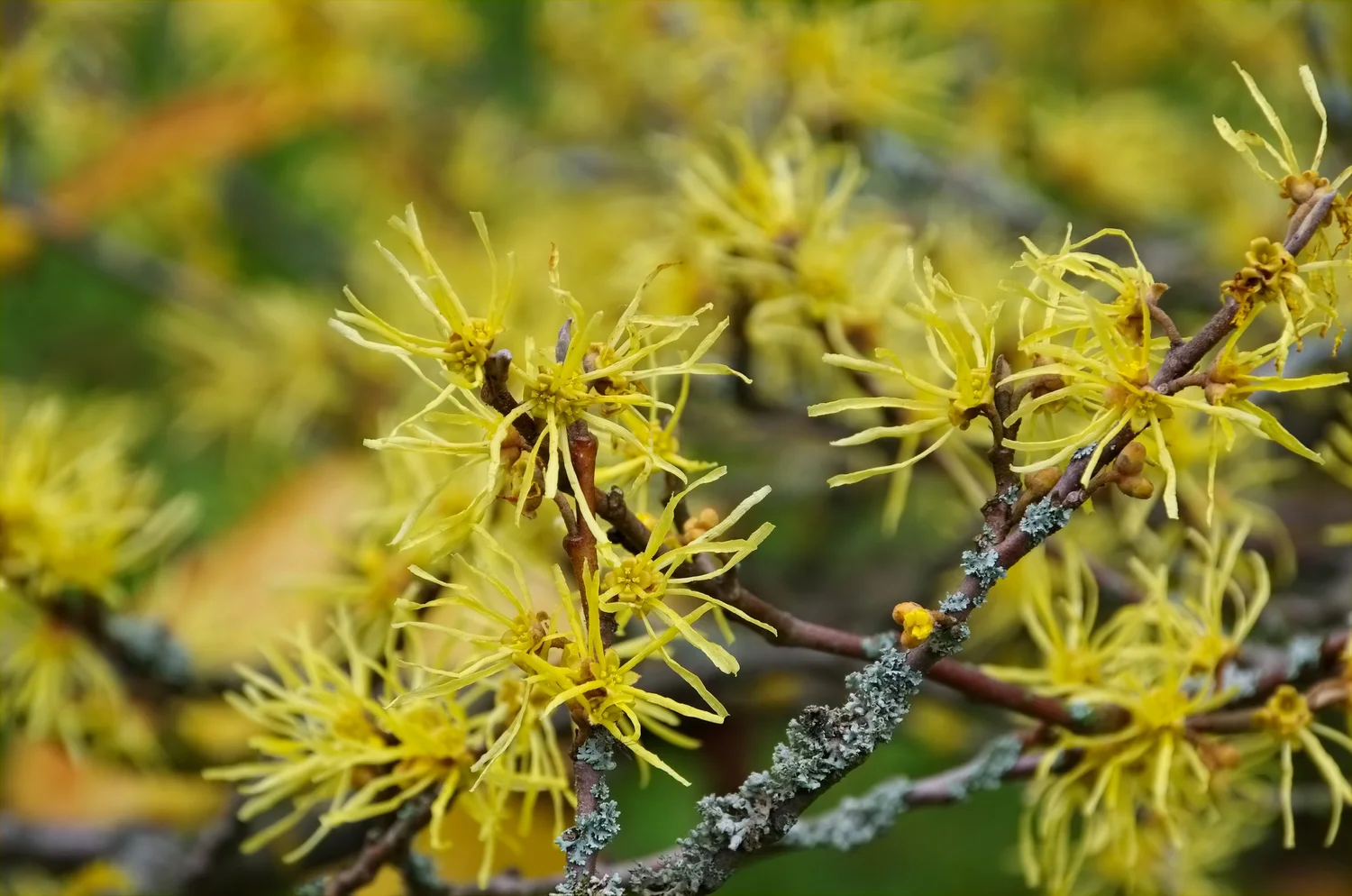
Winter flowers are often small, but many are deliciously scented, so plant them near a door or path where you will pass them every day. Witch hazels (Hamamelis) have spidery, ribbon-like flowers in yellow, orange or red, many with a spicy scent. Wintersweet (Chimonanthus praecox) carries waxy, pale yellow flowers with a powerful perfume on bare stems. Viburnum × bodnantense 'Dawn' has clusters of pink, sweetly scented flowers, and Christmas box (Sarcococca confusa) is a compact evergreen with tiny white flowers whose fragrance carries a long way.
At ground level, hellebores, snowdrops (Galanthus), Cyclamen coum and early irises such as Iris reticulata bring flowers to the darkest months. They are perfect under deciduous shrubs, which let in light in winter and shade them in summer.
Putting it together
The most effective winter planting combines several of these layers in one view: an evergreen backdrop, coloured stems or bark catching the light, grasses and seedheads in front, and a scented shrub by the path. Plan it from the window you look out of most in winter. If you would like help shaping a border that works through every season, my guide to planting a border that looks good all year is a good place to start.
Quick answers
What is the best shrub for winter interest?
For colour, dogwoods such as Cornus sanguinea 'Midwinter Fire' are hard to beat. For scent, Sarcococca confusa and Viburnum × bodnantense 'Dawn' are both excellent and easy to grow.
When should I cut back dogwood stems?
In early spring, before the leaves open. Cutting some or all stems back hard encourages bright new growth for the following winter.
Which grasses look good in winter?
Calamagrostis × acutiflora 'Karl Foerster', Miscanthus and Panicum virgatum all hold their shape well into winter. Cut them back in late winter or early spring.
