
The best plants for clay soil
Clay soil is naturally fertile and holds moisture well, so plenty of plants grow brilliantly in it. Some of the best perennials for clay are sanguisorbas, asters, heleniums, rudbeckias, Persicaria amplexicaulis, hardy geraniums and daylilies, while roses, viburnums, dogwoods and hawthorns are excellent shrubs and trees. Choose plants that enjoy rich, moist ground, add organic matter on top rather than digging, and clay will reward you with lush, generous growth.
Why clay is worth celebrating
Clay gets a hard time, but it's one of the richest soils you can garden on. Its tiny particles hold on to nutrients and water, so once plants are established they rarely go hungry or thirsty. Many of the most generous late-summer perennials actually prefer it to light, sandy soil.
The things to work around are its habit of staying wet in winter, baking hard in a dry summer, and being heavy to dig. Choosing the right plants and improving the structure gradually takes care of most of that.
Working with clay
Stay off it when wet. Walking on or digging wet clay squashes out the air. Use boards to spread your weight if you need to get onto a bed in winter.
Mulch every year. A thick layer of compost, leaf mould or a peat-free soil improver on the surface is gradually worked in by worms, improving drainage and structure. No digging needed.
Don't add sand. Small amounts of sand can make clay worse. Organic matter is the answer.
Plant in autumn or spring. Autumn works well in a reasonable year, but on very heavy, wet ground spring planting gives plants a better start.
There's more on mulches and soil improvers in my guide to peat-free gardening.
Perennials for clay soil
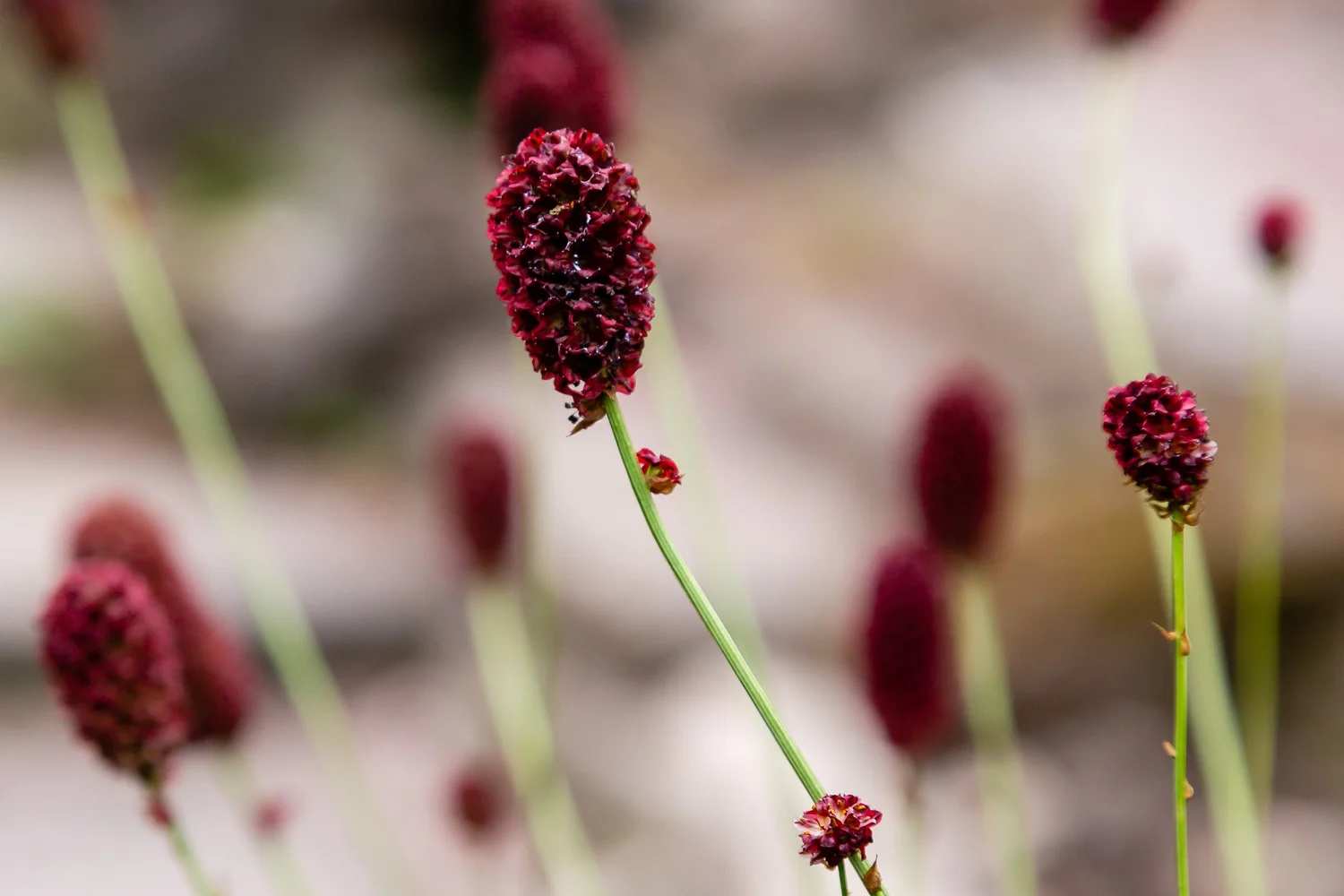
Sanguisorbas are some of my favourite plants, and they're very happy in moisture-retentive soil. 'Cangshan Cranberry', 'Blackthorn' and 'Tanna' all bring those lovely bobbing flowerheads, and Sanguisorba canadensis adds tall white bottlebrushes later in the season. You can read more in my Sanguisorba plant of the month post.
Asters (Symphyotrichum and Aster): late colour and a feast for pollinators.
Helenium: warm reds, oranges and yellows from midsummer.
Rudbeckia: golden daisies that flower for weeks.
Persicaria amplexicaulis: one of the longest-flowering perennials there is.
Hardy geraniums: reliable, weed-suppressing and very easy.
Hemerocallis: daylilies are tough and flower freely on heavy soil.
Astrantia: lovely in moist soil in sun or light shade.
Eutrochium: Joe Pye weed, for height and late-summer drama at the back of a border.
Grasses such as Miscanthus and Molinia also do well, giving movement and winter structure. Many of these plants are tall and vigorous on rich clay, so give them room, plant them in generous groups and let them lean into one another for support. Leave the stems and seedheads standing over winter, then cut everything back in late winter as the new shoots start to show.
Shrubs and trees for clay
Roses famously thrive in clay, and are well worth growing if you're on heavy ground. Viburnums, dogwoods (Cornus), Hydrangea paniculata, philadelphus and weigela all establish well too. For trees, look at crab apples (Malus), hawthorn (Crataegus), Amelanchier, rowan and birch. Bare-root trees and hedging are a great way to plant clay over winter, and I've written a separate guide on how to plant bare-root trees and hedging.
Bulbs for clay
Some bulbs love the moisture clay provides. Camassia and the snake's head fritillary, Fritillaria meleagris, are both naturally happy in damp ground, and snowdrops settle in well. One of my favourite bulbs, Narcissus poeticus var. recurvus, the 'Pheasant's Eye' daffodil, is a good choice for heavier soils and naturalises beautifully in grass.
Tulips and alliums prefer good drainage, so on heavy clay they're often happiest in pots, or planted on a little grit in the base of the hole in the best-drained spot you have.
Clay soil checklist
Choose plants that enjoy rich, moist soil.
Mulch generously every year rather than digging.
Keep off the soil when it's wet.
Never add sand to improve clay.
Plant in spring if your ground is very wet over winter.
Grow tulips in pots or the best-drained spot.
Quick answers
What is the best thing to add to clay soil?
Organic matter, such as garden compost, leaf mould, well-rotted manure or a peat-free soil improver, spread on the surface each year. Over time it improves drainage and makes the soil much easier to work.
Do roses like clay soil?
Yes. Roses are among the best shrubs for clay because they love its fertility and moisture. Mulch them well each spring and they'll reward you with strong growth.
What plants should I avoid on clay?
Plants that need sharp drainage, such as many Mediterranean herbs, lavender and some silver-leaved plants, can struggle in wet winter clay. Grow them in raised beds or containers instead.
